How Virtual Cards Reduce Payment Fraud
Payment fraud has become one of the biggest challenges for businesses and consumers alike.

As online transactions continue to grow, cybercriminals are finding new ways to steal card details, exploit data breaches, and commit unauthorized transactions.
Virtual cards are emerging as one of the most effective tools to reduce these risks. Unlike traditional plastic cards, virtual cards are designed with security at their core, giving businesses greater control over every transaction.
What Are Virtual Cards?
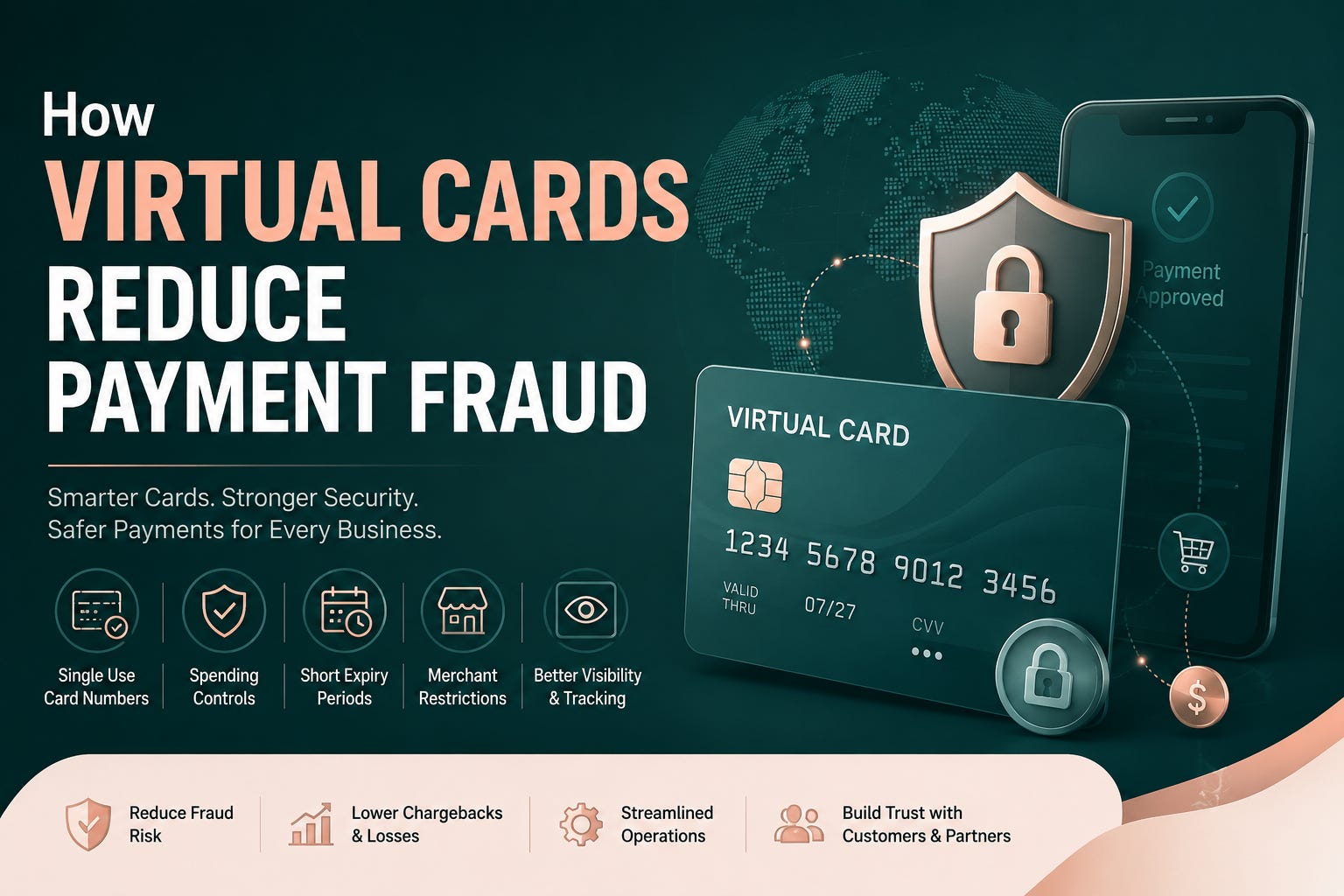
A virtual card is a digitally generated payment card that contains a unique card number, expiration date, and security code. It works just like a physical card for online or digital payments but exists only in electronic form.
Many virtual card solutions also allow businesses to create cards instantly, set spending limits, define expiration dates, and restrict where the card can be used.
Why Traditional Cards Are More Vulnerable
A physical card typically keeps the same card number for years. If that information is exposed through a phishing attack, malware, or a merchant data breach, criminals can continue using it until the card is blocked or replaced.
This creates several challenges:
Unauthorized purchases
Account takeover risks
Higher chargebacks
Costly card replacement processes
Financial losses for businesses and consumers
Virtual cards address many of these weaknesses by limiting the value of stolen card information.
How Virtual Cards Reduce Payment Fraud
Single Use Card Numbers
Many virtual cards can generate a unique card number for a single transaction.
Once the payment is completed, that card number becomes invalid. Even if someone steals the details, they cannot reuse them for another purchase.
This dramatically reduces the impact of data breaches.
Merchant Specific Cards
Businesses can issue virtual cards that work only with a specific merchant.
For example, a card created for a cloud service provider cannot be used at an online retailer or another website.
This prevents unauthorized spending if the card details are compromised.
Spending Controls
Virtual cards allow businesses to define spending rules before a payment is made.
These controls may include:
Maximum transaction amount
Daily or monthly spending limits
Currency restrictions
Geographic restrictions
Merchant category restrictions
Even if card information is stolen, predefined controls limit potential losses.
Short Expiration Periods
Traditional cards may remain valid for several years.
Virtual cards can expire within hours, days, or after a specific project is completed.
Short validity periods significantly reduce opportunities for fraudulent use.
Real Time Card Issuance
If a card needs to be replaced, businesses can instantly generate a new virtual card without waiting for physical delivery.
This minimizes operational disruption while maintaining strong security.
Better Visibility
Every virtual card can be assigned to a specific employee, department, supplier, or project.
This improves transaction tracking and makes suspicious activity easier to identify during audits.
Benefits for Businesses
Virtual cards provide more than just fraud protection.
Organizations also benefit from:
Improved expense management
Faster supplier payments
Better financial reporting
Simplified reconciliation
Reduced administrative workload
Greater control over employee spending
Finance teams gain detailed visibility while reducing the risks associated with shared corporate cards.
Common Business Use Cases
Virtual cards are now widely used across industries for:
Online advertising spend
Software subscriptions
Travel bookings
Vendor payments
Employee expenses
Procurement
Cross border business payments
Because each payment can have its own dedicated virtual card, organizations gain tighter control over company spending.
The Future of Secure Payments
As digital commerce expands, businesses need payment methods that combine convenience with stronger security.
Virtual cards meet this need by replacing static payment credentials with dynamic, controlled, and purpose specific payment information.
When combined with tokenization, real time fraud monitoring, and AI driven risk analysis, virtual cards become an important part of a modern payment security strategy.
Final Thoughts
No payment method can eliminate fraud entirely, but virtual cards significantly reduce the attack surface available to criminals.
Features such as single use card numbers, merchant restrictions, spending controls, and short expiration periods make it much harder for stolen card information to be misused.
For businesses looking to improve payment security while gaining greater visibility and control over spending, virtual cards are quickly becoming an essential tool rather than just a convenient alternative to physical cards.
As digital payments continue to evolve, organizations that adopt virtual cards today will be better positioned to protect their finances, streamline operations, and build greater trust with customers and partners.
